Vocabulary through video: translated subtitles or captions?
Separate word-form recognition, meaning and use when practising vocabulary through movie dialogue.
Knowing a translation is not the same as recognizing a word in fast speech. With vocabulary through video, check form, meaning and your ability to use a phrase separately.
A study comparing subtitle types
Learning vocabulary through audiovisual input: The differential effect of L1 subtitles and captions reports two studies comparing first-language subtitles and same-language captions. Reported findings linked prior vocabulary size and word occurrence in the clip with learning. A relationship is not a guarantee for every individual.
Choose a few contextual phrases
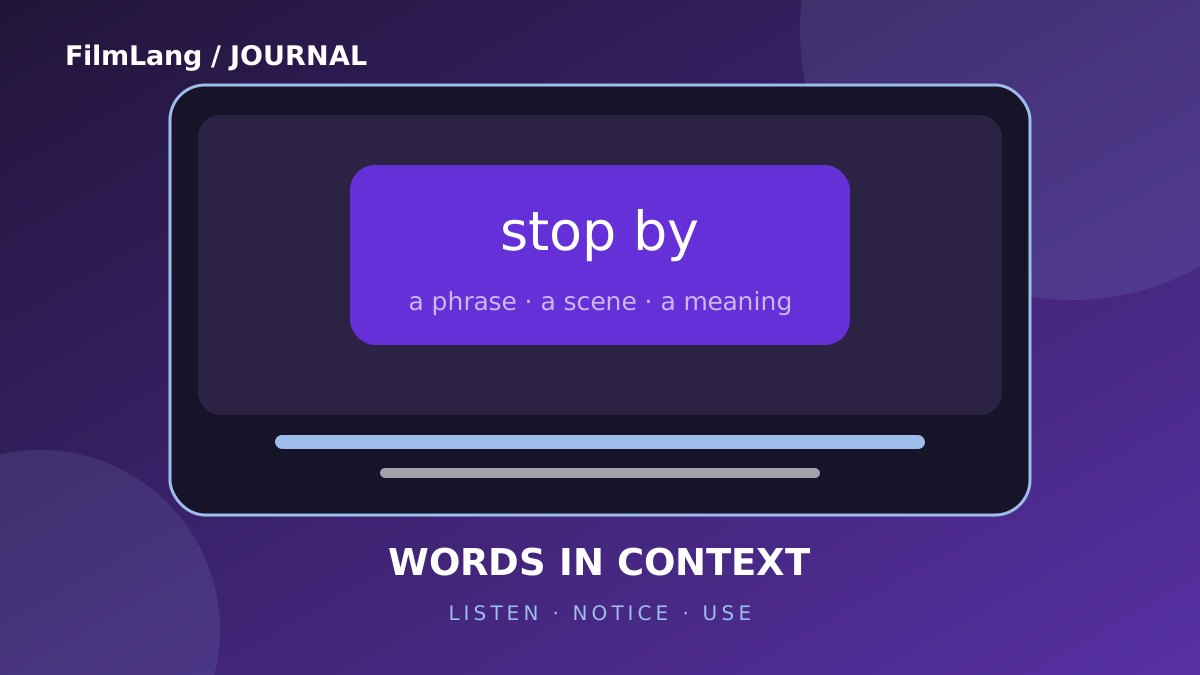
For one session, collect a few useful expressions from the scene. Record “stop by” with the original sentence and situation rather than only its Persian equivalent. Then imagine another situation and produce your own sentence. This is a practical study suggestion.
Return from the dictionary to the audio
Use the in-video dictionary to find saved meanings, then replay the dialogue. Notice stress, rhythm and connected speech. Reading a translation alone leaves the listening task unfinished.
Check recall later
Before opening your notes next time, recall the scene and say the expression. If you know the meaning but cannot use it, practise new sentences. If you cannot hear it, return to sentence replay rather than expanding the word list.
Source and scope
The comparison does not establish universal superiority for bilingual subtitles. See the dual-subtitle guide for choosing support.